

Now
In Camille Claudel’s time, being a sculptress in Paris
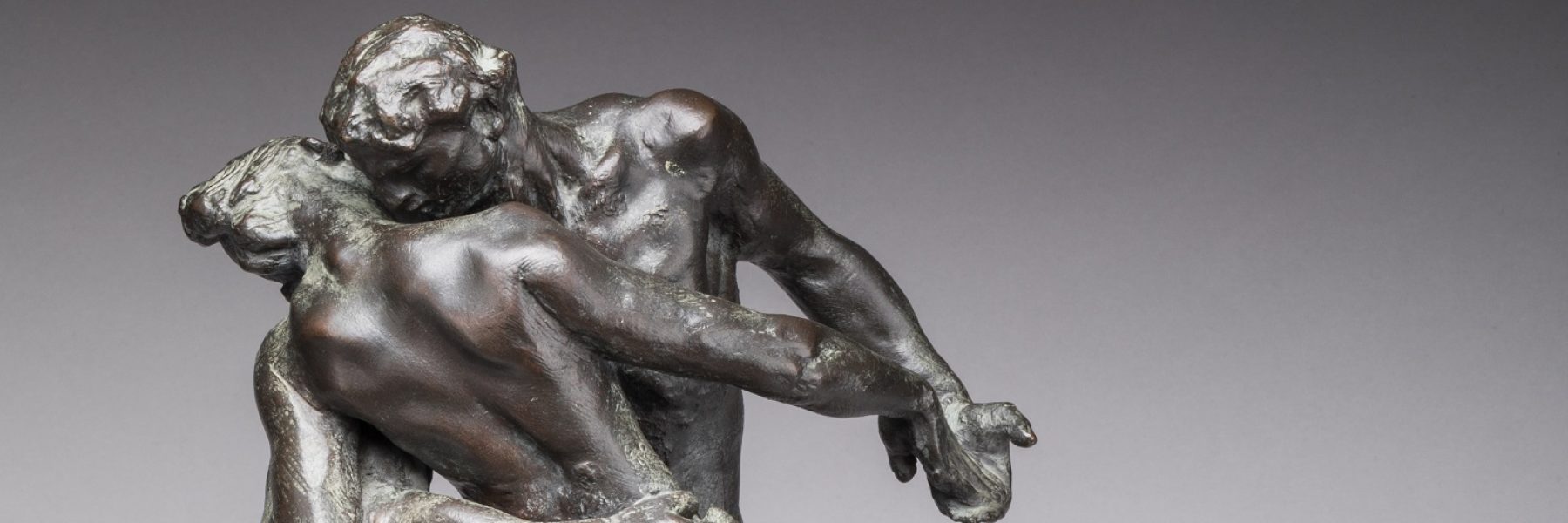
Informations sur l’exposition
Current exhibition
From Saturday, June 27, to Sunday, November 08, 2026
Since her rediscovery in the 1980s, Camille Claudel has inspired major monographic exhibitions. Her renown is such today that it might mistakenly lead one to believe she was the only female sculptor of her time. Yet, around 1900, many others followed the same path as her and distinguished themselves in the field of sculpture, despite the obstacles linked to their status as women. As part of the exhibition “In the Time of Camille Claudel: Being a Sculptor in Paris,” these leading female sculptors emerge from the shadows!
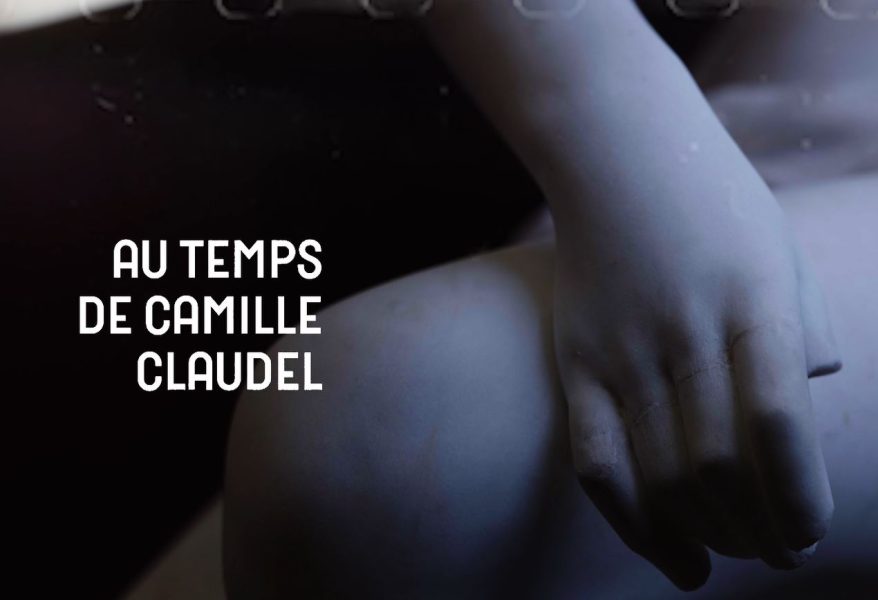
Find all the exhibition texts in English to listen to
Discover the exhibition’s content with our audio guides.
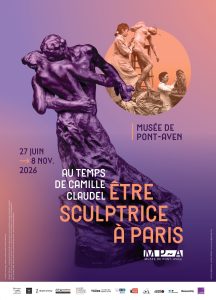
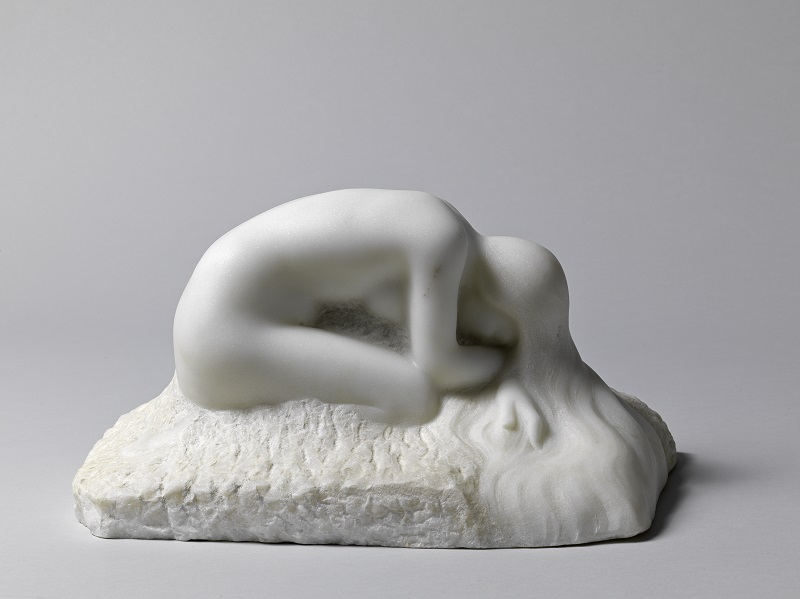
An exhibition co-produced by the Camille Claudel Museum, the Museum of Fine Arts in Tours, and the Pont-Aven Museum brings together the works of some twenty artists: Charlotte Besnard, Marie Cazin, Madeleine Jouvray, as well as Jessie Lipscomb, Agnès de Frumerie, Anna Bass, Jane Poupelet, and many others. French or foreign, often daughters or wives of artists, they were Camille Claudel’s studio colleagues, friends, or sometimes rivals. Some preceded her, others succeeded her. Thanks to national and international loans, nearly 90 objects—sculptures, but also painted, drawn, and photographed portraits of female sculptors, as well as photographs and correspondence—will bring to life Camille Claudel’s artistic circle of women, from her beginnings in the cosmopolitan Paris of the 1880s to her confinement in March 1913. What artistic training was available to women at this turn of the 20th century? What strategies did female sculptors employ to carve out a place for themselves in this male-dominated field? What relationships did Camille Claudel maintain with her contemporaries? And what roles did these artists play within Auguste Rodin’s studio? These are just some of the questions explored in the exhibition.
This exhibition has received the “Exhibition of National Interest” label awarded by the Ministry of Culture and, as such, benefits from exceptional support. It is presented successively at the Camille Claudel Museum in Nogent-sur-Seine, from September 13, 2025 to January 4, 2026, then at the Museum of Fine Arts in Tours, from January 31 to June 1, 2026, and at the Pont-Aven Museum from June 27 to November 8, 2026.
The overall concept of the exhibition was conceived by Anne Rivière, an art historian and specialist in women sculptors, in collaboration with the Camille Claudel Museum. She follows the three phases of the exhibition to adapt this synopsis to each venue. The selection of works aims to establish, as far as possible, a dialogue between the artworks and representations of the artist in her studio (whether painted, drawn, or photographed), in order to illustrate how women staged and (re)presented themselves in their role as artists.
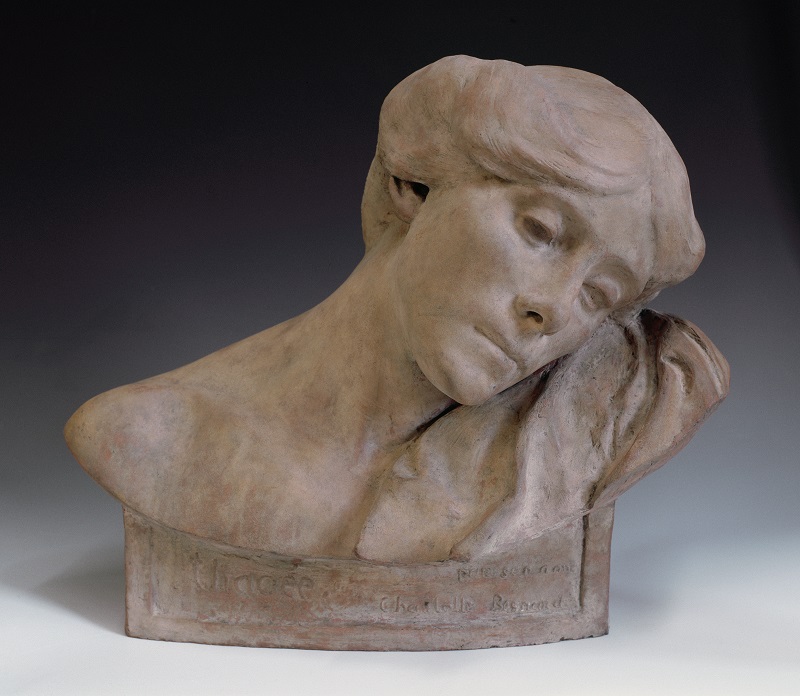
Female sculptors at the turn of the 20th century
When Camille Claudel arrived in Paris in 1881, having just turned 16, she entered an art world already populated by talented female sculptors. For these women, it was still difficult to gain access to training and to obtain recognition. Stereotypes setting supposed feminine weakness against the virile image associated with sculpture were still firmly in place. Women wishing to have a career in sculpture met with two obstacles: exclusion from formal training, especially at the École des Beaux-Arts; and the financial constraints of traditional sculpture, including the cost of marble and bronze and professional models and craftsmen.
This first section of this exhibition focuses on those who, against the odds, succeeded in pursuing their calling and making their mark on the Paris art world, following diverse paths and strategies. Marie Cazin, Charlotte Besnard and Jeanne Itasse benefited from their association with an artist husband or father. Others, such as Laure Coutan-Montorgueil (from a family of craftsmen) and Marguerite Syamour (raised in a progressive intellectual environment) were able to tackle the difficulties of becoming sculptors without any opposition from their entourage.
Blanche Moria, born into a family of shopkeepers and recognised as a statuary artist after her death, had a more unusual career. A militant feminist, she joined the struggle of the Union of Women Painters and Sculptors founded in 1881 by sculptor Hélène Bertaux. This movement led to partial access for women to the École des Beaux-Arts in 1897, with full access being granted in 1900.
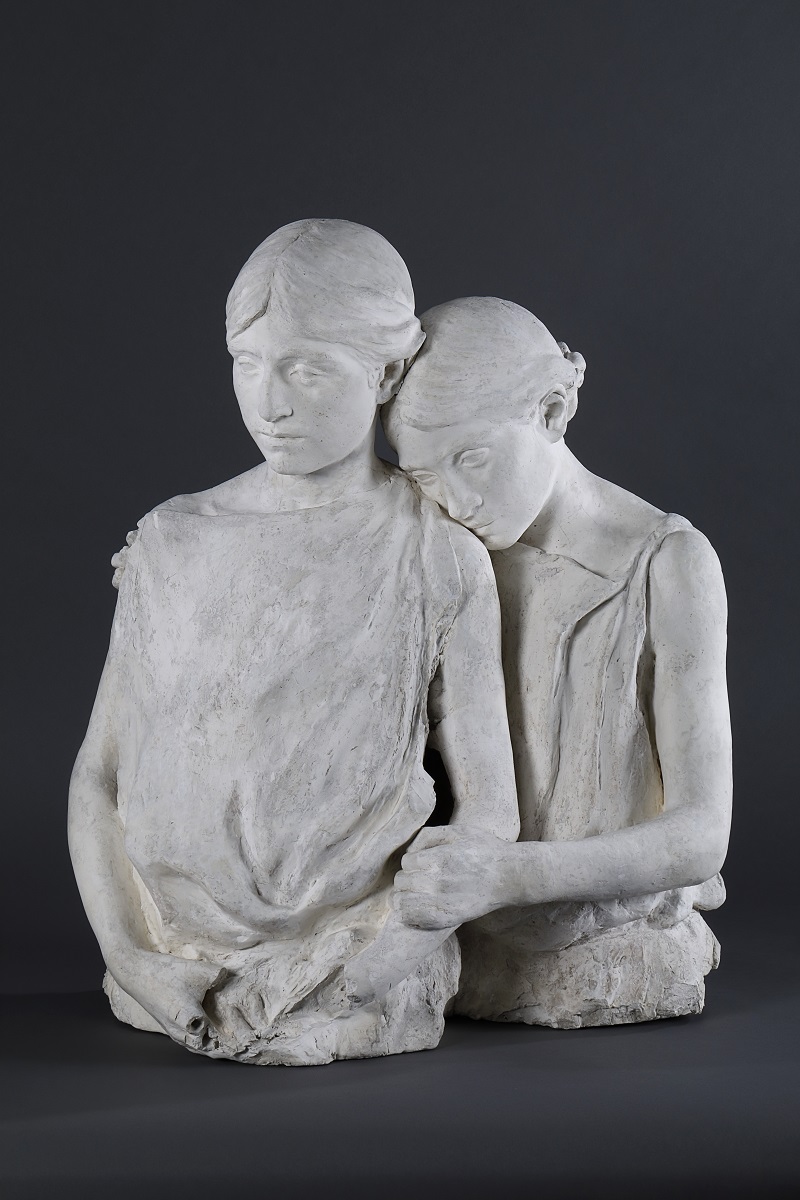
In 1881, Camille Claudel moved with her family to Paris, first to 135 Boulevard du Montparnasse and then to 111 Rue Notre-Dame-des-Champs, not far from the Académie Colarossi. This private school was open to women (who were charged a higher tuition) and provided an alternative to the École des Beaux-Arts. Its teaching was focused on practical exercise, including sculpting from life models. Claudel studied there alongside other young female artists from France and abroad, mainly from Great Britain and Scandinavia.
As sculpture requires a large and therefore expensive studio—especially costly in the heart of Paris—artists often shared a workspace. With the help of her father, Claudel rented a studio at 117 Rue Notre-Dame-des-Champs along with several women she knew from the Académie, including painters Ghita Theuriet and Laetitia von Witzleben and sculptors Sigrid af Forselles, Madeleine Jouvray and Jessie Lipscomb. Alfred Boucher, their instructor at Académie Colarossi (who Claudel had met in Nogent-sur-Seine), made weekly visits to supervise the young women’s work.
Described in the first biography of Claudel as a “small community of independent students in fine arts” with Claudel as their leader, this shared artists’ studio fostered mutual aid and friendship as well as jealousy and rivalry.
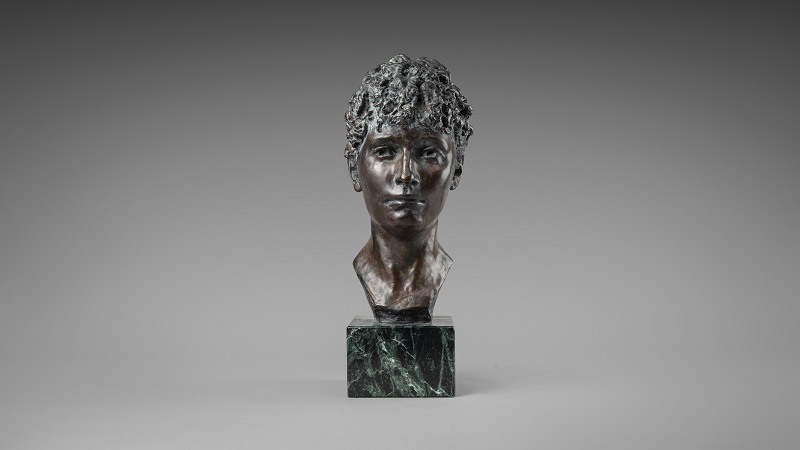
Friends and rivals: Camille Claudel and her studio partners
In 1881, Camille Claudel moved with her family to Paris, first to 135 Boulevard du Montparnasse and then to 111 Rue Notre-Dame-des-Champs, not far from the Académie Colarossi. This private school was open to women (who were charged a higher tuition) and provided an alternative to the École des Beaux-Arts. Its teaching was focused on practical exercise, including sculpting from life models. Claudel studied there alongside other young female artists from France and abroad, mainly from Great Britain and Scandinavia.
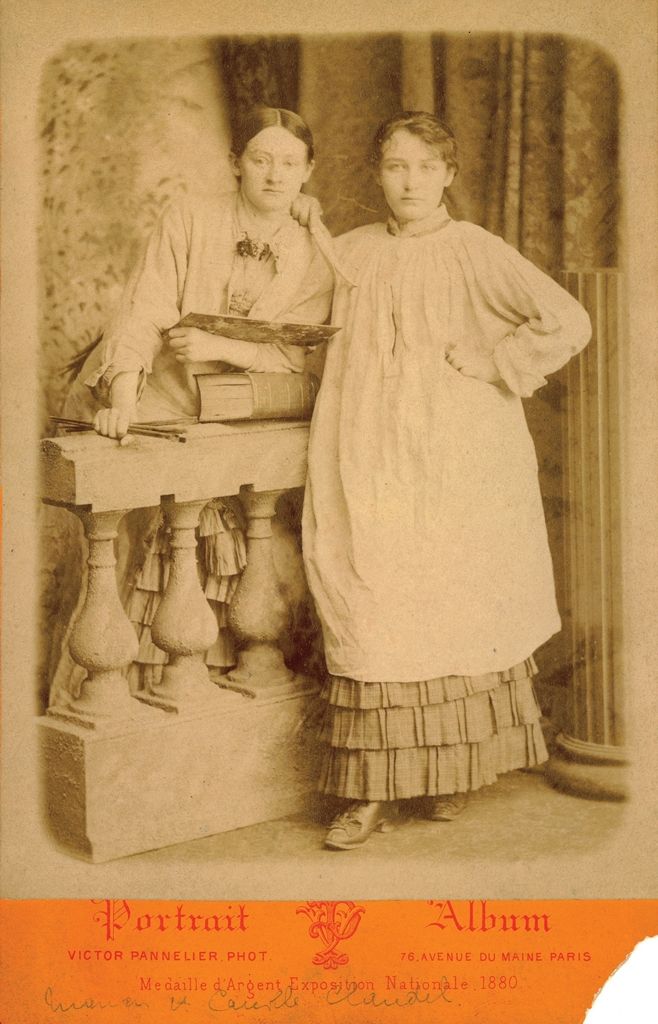
As sculpture requires a large and therefore expensive studio—especially costly in the heart of Paris—artists often shared a workspace. With the help of her father, Claudel rented a studio at 117 Rue Notre-Dame-des-Champs along with several women she knew from the Académie, including painters Ghita Theuriet and Laetitia von Witzleben and sculptors Sigrid af Forselles, Madeleine Jouvray and Jessie Lipscomb. Alfred Boucher, their instructor at Académie Colarossi (who Claudel had met in Nogent-sur-Seine), made weekly visits to supervise the young women’s work.
Described in the first biography of Claudel as a “small community of independent students in fine arts” with Claudel as their leader, this shared artists’ studio fostered mutual aid and friendship as well as jealousy and rivalry.
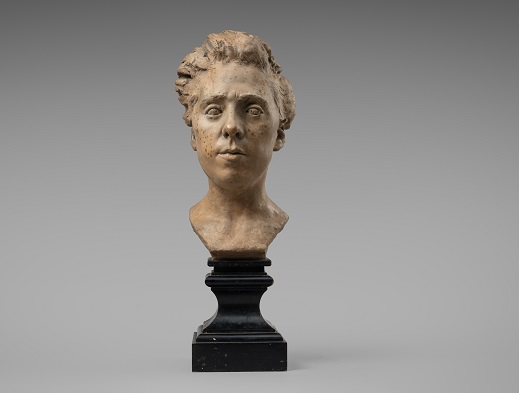
This shared studio space allowed the young female sculptors to live a “bohemian life” while reassuring their families about their career choices. Brothers and male friends, such as Paul Claudel, often visited these studios, reflecting a complex social dynamic despite the conventions of the time. Strong bonds were forged between these artists. Today, portraits of them together survive, presented side-by-side in this section. Painted or sculpted, they were created both to compensate for the lack of professional models and to bear witness to their friendship.
In the orbit of Rodin: influence and emancipation
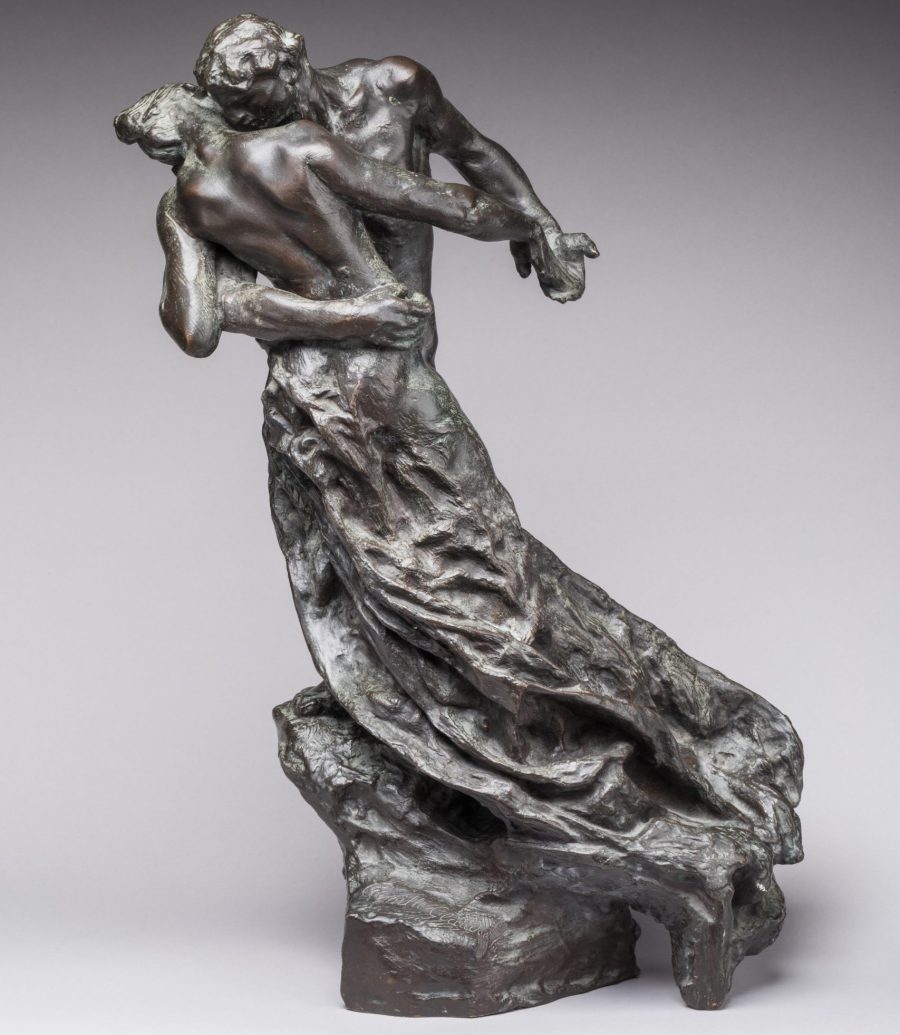
The third section of the exhibition explores the relationship between women sculptors and Auguste Rodin, examining the interplay of knowledge transmission, influence, and the desire for emancipation. In the autumn of 1882, when Rodin replaced Alfred Boucher, who had left for Florence, to oversee Claudel’s studio on Rue Notre-Dame-des-Champs, he discovered a group of young women determined to establish themselves as professionals and vying for his attention. Two years earlier, thanks to the commission for The Gates of Hell, Rodin had established a large studio at the Marble Depot, which he organized as a collaborative enterprise. Around 1884, Claudel joined this studio as a student, alongside other apprentice sculptors such as Madeleine Jouvray, Jessie Lipscomb, and, later, Ottilie Maclaren (1875-1947).
Not considering himself a teacher in the traditional sense, Rodin trained his “students” through practice. Working side by side in the studio, the artists used the same models, exchanged ideas, and sometimes even challenged each other in the treatment and execution of similar subjects. Studio life and daily interactions influenced their creations. For example, Claudel, Lipscomb, and Rodin used the same Italian model, Giganti, but their interpretations—brought together for the first time—differed: Rodin produced a stylized head, Claudel heightened its expressiveness, while Lipscomb remained rooted in classicism.
Madeleine Jouvray, for her part, became Rodin’s assistant, carving several of his marbles. While she demonstrated considerable technical mastery, her own work seemed to struggle to break free from Rodin’s influence, as evidenced by *Soul Pain*, which is reminiscent of *The Age of Bronze*. The Scottish sculptor Ottilie Maclaren, who had attempted to study under Camille Claudel, became Rodin’s student and then collaborator between 1899 and 1901. Others, such as the Swedish sculptors Agnès de Frumerie (1869-1937) and Ruth Milles (1873-1941), although they did not join Rodin’s studio, moved in his circle and were influenced by him. Around Rodin, these sculptors embraced Symbolism, producing unvarnished representations of the aging, suffering, or dying body. Several striking sculptures are on display: Claudel’s Clotho, Frumerie’s The Struggle for Existence, and Jouvray’s The Book of Life, Laughter and Tears.
After Rodin, after Claudel: the challenge of the modern
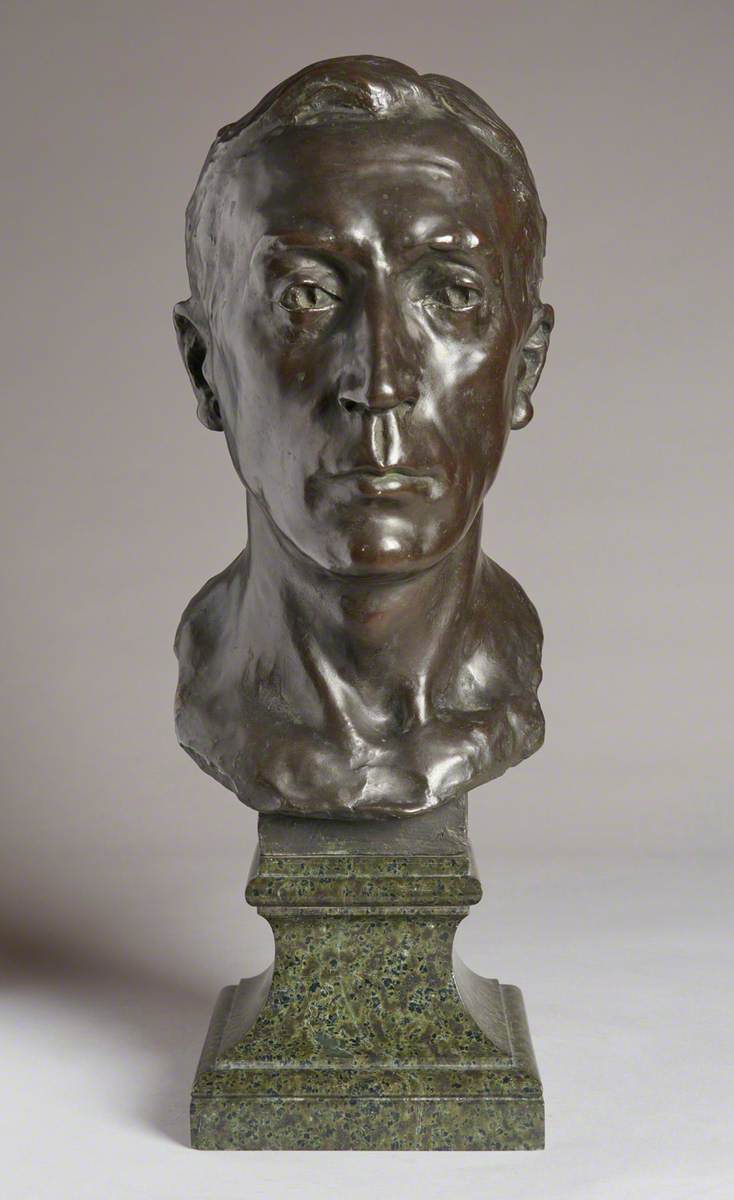
The exhibition concludes with the “post-Rodin” period. After their breakup in 1893, Camille Claudel sought at all costs to free herself from the master’s influence. In a letter to her brother, she declared triumphantly: “You see, it’s no longer Rodin at all.” The studio became an isolated space where Claudel drew inspiration solely from her personal experiences. As Charles Morice emphasizes, her works—The Mature Age, Clotho, or her series of “sketches from nature”—”belong uniquely to Camille Claudel; no one before her had done this, and no one has done it since,” thus marking her place in this post-Rodin era.
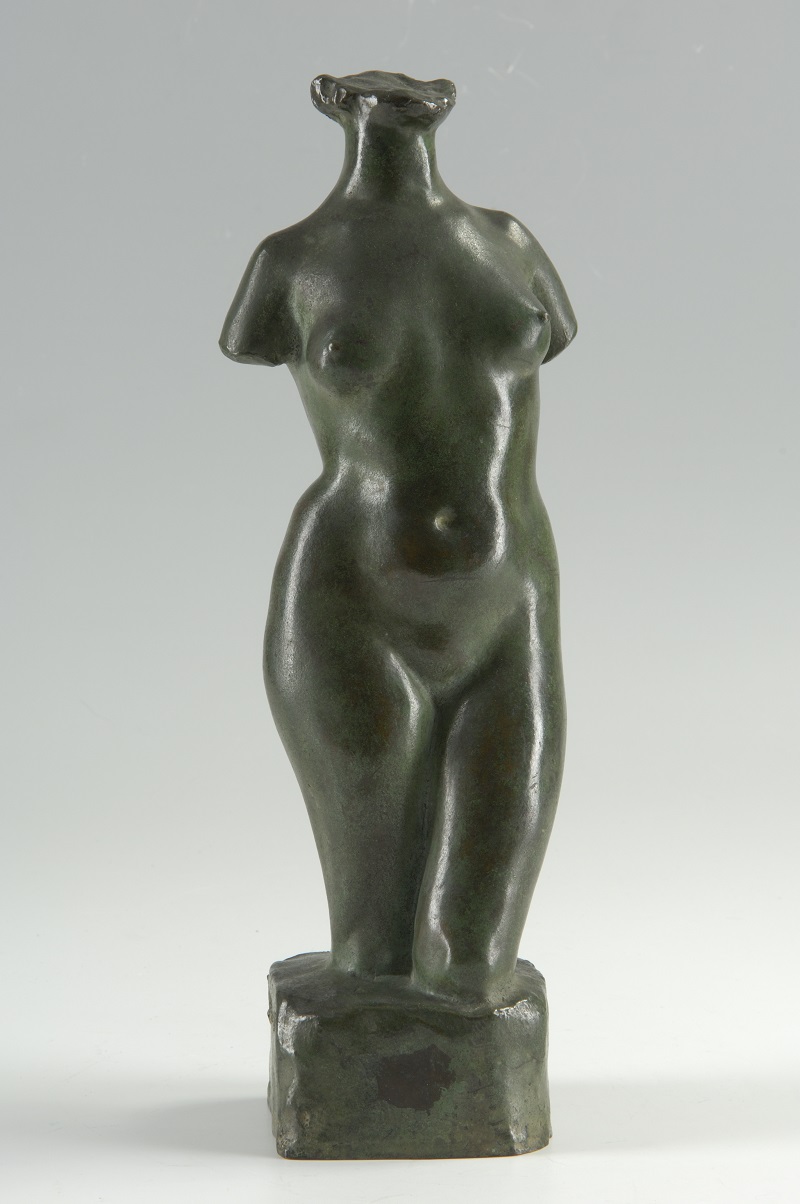
Often compared to Camille Claudel by critics, Anna Bass (1876-1961), Jane Poupelet (1874-1932), and Yvonne Serruys (1873-1953) belong to a new generation of artists who rejected Rodin’s expressionism and symbolism, returning to full forms and a purity of contours. Poupelet and Serruys were thus featured alongside Claudel in an exhibition of French art organized in Zurich in February-March 1913, at the very moment when Claudel disappeared from the art scene following her internment on March 10, 1913. Bass, Poupelet, and Serruys presented works that bear a certain resemblance to Claudel’s—for example, their female torsos are compared to those of both Claudel and Bass—thus creating a link between Claudel’s work and the sculpture revitalized after the Great War. They sought to redefine the codes of representation, particularly around the female nude. Rejecting academic idealization, they adopted a more direct and intimate perspective, revealing a modern sensibility, as evidenced by Poupelet’s Woman at Her Toilette or Serruys’s Blind Man’s Buff. Although recognized during their lifetimes, they were gradually eclipsed by the emergence of the avant-garde.
FOCUS ON SOME WORKS
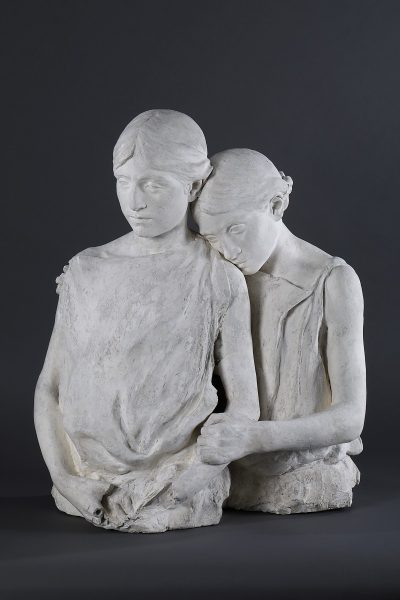
Marie Cazin, Young Girls or Youth
The life and career of Marie Cazin are quite poorly known and information about the artist is gleaned from articles devoted to her husband, Jean-Charles Cazin, considered the "master" of their family of artists.
Camille Claudel, Louise Claudel
Although the pastel depicting Louise Claudel is part of the series of portraits of the artist's close friends, it stands out for its dimensions – twice as large as those of her other graphic works – its technique and the treatment of the drawing.
Madeleine Jouvray, Danaïde
Around 1883, Madeleine Jouvray became a student and practitioner in Auguste Rodin's studio. Several of her sculptures directly reference, either through their themes or their formal choices, the works of her master.
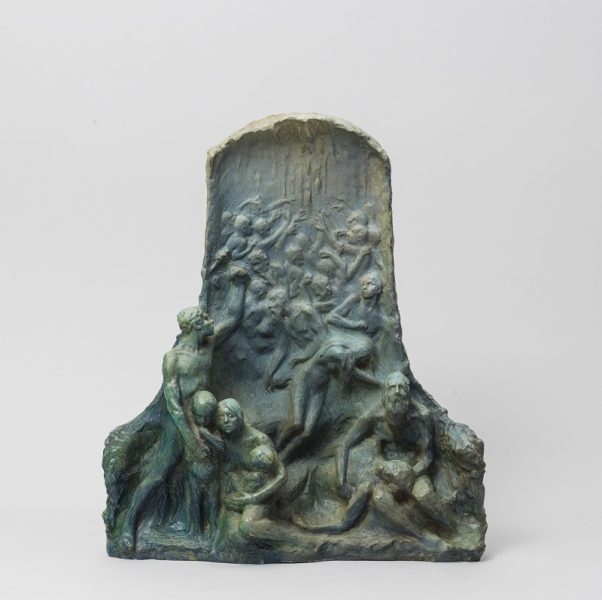
Agnès de Frumerie, The Golden Spring or The Struggle for Existence
The Swedish artist Agnès de Frumerie, active in Paris between 1892 and 1934, distinguished herself through a prolific output, particularly in the field of art ceramics.
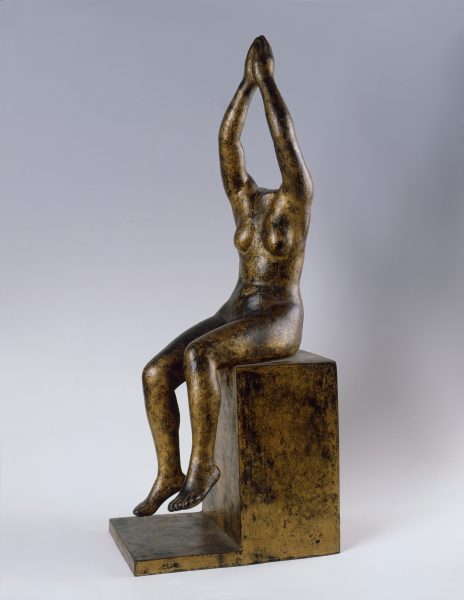
Jane Poupelet, Imploration
Very famous during her lifetime, Jane Poupelet was part of the "Schnegg gang" – this group of artists who renewed sculpture by returning to the purity and simplicity of forms.
List of artists presented
Anna Bass (1876-1961), born Anna Julie Bass
Carolina Benedicks-Bruce (1856-1935) (Suédoise), born Carolina Marie Benedicks
Charlotte Besnard (1854-1931), born Charlotte Gabrielle Dubray
Marie Cazin (1844-1924), born Marie Clarisse Marguerite Guillet
Camille Claudel (1864-1943)
Laure Coutan-Montorgueil (1855-1915), born Laure Martin
Sigrid af Forselles (1860-1935) (Finlandaise), born Sigrid Maria Rosina af Forselles
Agnès de Frumerie (1869-1937) (Suédoise), born Agnès Augusta Émilie Éléonore Kjellberg
Jeanne Itasse (1865-1941), born Marie Gabrielle Zoé Jeanne Itasse
Madeleine Jouvray (1862-1935), born Marie Madeleine Jouvray
Jessie Lipscomb (1861-1952) (anglaise)
Ottilie Maclaren (1875-1947) (écossaise), born Ottilie Helen Maclaren
Ruth Milles (1873-1941 (Suédoise), born Ruth Anna Maria Andersson
Blanche Moria (1859-1926)
Jane Poupelet (1874-1932), born Marie Marcelle Jane Poupelet
Yvonne Serruys (1873-1953) (Belge)
Marguerite Syamour (1857-1945), born Marie-Louise Henriette Marguerite Gagneur
Laetitia de Witzleben (1849-1923) (Allemande), born Julie Léopoldine Ida Pauline Lätitia von Witzleben

